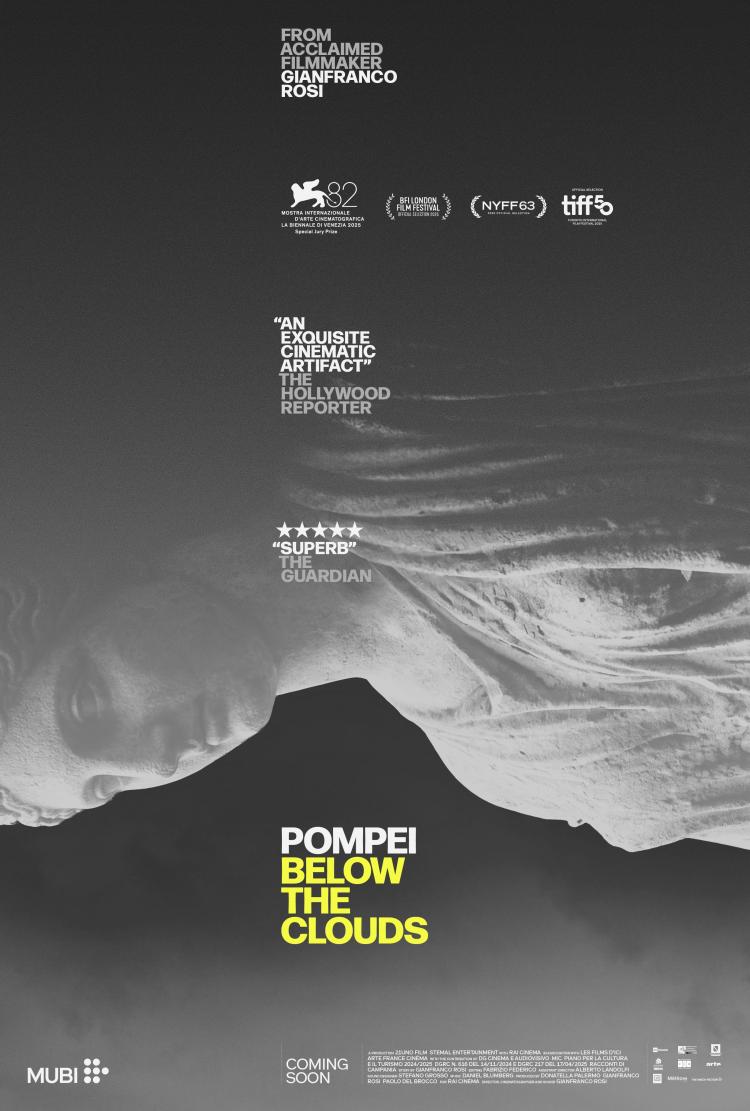
Review: Pompei: Below the Clouds (2026)
Every now and then, a movie comes along that tackles a story so grand and tragic, you wonder if it can truly do it justice. 'Pompei: Below the Clouds,' hitting screens in 2026, dives headfirst into one of history's most iconic and devastating events. I recently had the chance to see it, and it's certainly left me with a lot to unpack. This isn't just a spectacle; it’s a really ambitious attempt to put human faces on an ancient catastrophe, and for the most part, it genuinely succeeds.
1. Introduction
When you hear "Pompeii," you immediately think of the catastrophic eruption of Mount Vesuvius in AD 79. It's a story etched into our collective memory, a snapshot of life tragically frozen in time. So, tackling this subject on screen isn't easy – how do you make it feel fresh, personal, and respectful, while also delivering the epic scale everyone expects? 'Pompei: Below the Clouds' boldly steps up to that challenge. I went in with a mix of excitement and a little skepticism, wondering if it would just be another CGI-heavy disaster flick. Happily, what I found was a film that, while undeniably thrilling, also had a surprising amount of heart and thoughtful storytelling.
2. Story Overview
The movie transports us to the bustling, vibrant city of Pompeii in the days leading up to its destruction. Instead of focusing on just one or two characters, the film cleverly weaves together a tapestry of lives. We meet Marcus, a gifted young artisan trying to make a name for himself and win the heart of Livia, a strong-willed baker's daughter. Their romance is sweet and forms a central emotional anchor. Elsewhere, we follow Gaius, a pragmatic Roman legionnaire struggling with his past, and a resilient mother, Elara, desperate to secure a better future for her young son amidst the city's rigid social structures.
The film does a fantastic job building up the everyday life in Pompeii – the markets, the bathhouses, the political tensions, and even the subtle rumblings of the earth that most citizens casually dismiss. This slow burn allows us to really connect with these people before the inevitable happens. And when Vesuvius finally unleashes its fury, it’s a truly terrifying and relentless sequence that captures the sheer scale of the disaster, forcing our characters to confront their mortality and make impossible choices.
3. Main Characters & Performances
The strength of 'Pompei: Below the Clouds' truly lies in its cast. Leo Vance, as the aspiring artist Marcus, brings a wonderfully earnest and hopeful energy to the screen. You really root for him to achieve his dreams and find happiness. Opposite him, Isabella Rossi shines as Livia; she's not just a damsel in distress but a fierce, independent spirit who genuinely drives parts of the story. Their chemistry is believable and touching, making their struggle for survival all the more poignant.
Veteran actor Simon Blackwood delivers a nuanced performance as Gaius, the battle-hardened legionnaire. He perfectly captures the character's internal conflict and quiet courage. And young newcomer Anya Sharma, playing Elara, brings a quiet dignity and fierce maternal instinct that resonated deeply with me. Even the supporting cast, from arrogant senators to common street vendors, feels authentic and lived-in. The performances collectively manage to humanize a historical event, making you care deeply about what happens to these individuals.
4. What Works Well
First off, the visual effects are absolutely astounding. The depiction of Vesuvius’s eruption is nothing short of breathtaking – terrifyingly realistic and utterly immersive. It’s clear a lot of care went into making Pompeii itself feel like a real, lived-in city, from the detailed sets to the vibrant costumes. I felt truly transported back in time.
Beyond the spectacle, the film's greatest strength is its emotional core. It doesn't shy away from the horror, but it grounds it in genuine human stories of love, loss, courage, and desperation. The pacing is also very well-managed; the build-up feels natural, allowing us to invest in the characters before the chaos erupts. When the disaster strikes, the film doesn't rely solely on shock value but uses the emotional connections we've built to amplify the stakes. The musical score is also fantastic, enhancing both the peaceful moments and the intense action sequences.
5. What Could Be Improved
While 'Pompei: Below the Clouds' is genuinely compelling, there are a couple of small areas where it could have been even stronger. The first half, while important for character development, felt a tiny bit slow in places. A few of the subplots, particularly those involving some of the more minor political figures, didn't always feel as crucial or as fully developed as the main character arcs. I also felt that some of the dialogue, while mostly fine, occasionally leaned a little too modern, pulling me out of the ancient setting just for a fleeting moment. It’s nothing major, but enough to notice. Finally, while the ending is powerfully dramatic, a very brief moment felt a tad rushed in how it resolved some character fates, perhaps leaving a tiny bit less impact than intended.
6. Overall Entertainment Value
Despite those minor points, 'Pompei: Below the Clouds' is an incredibly engaging and entertaining watch. It's a powerful blend of historical epic and intimate human drama. It kept me on the edge of my seat during the disaster sequences and genuinely moved me during the character-focused moments. If you enjoy historical dramas that don't skimp on spectacle but also prioritize storytelling and emotional depth, then you're in for a real treat. It’s the kind of movie that sparks conversations afterwards and makes you think about history, resilience, and the fragile beauty of life. I left the cinema feeling like I’d been on an incredible, albeit harrowing, journey.
7. Final Verdict
'Pompei: Below the Clouds' is a truly ambitious and largely successful film that manages to capture both the epic tragedy and the deeply personal stories of one of history's most famous disasters. It's visually stunning, emotionally resonant, and genuinely gripping from start to finish. While not absolutely perfect, its strengths far outweigh its minor weaknesses. It’s a powerful cinematic experience that respects its subject matter and delivers on both spectacle and soul. Highly recommended for anyone looking for a film that will thrill, move, and make you think.